.jpg)


Showing posts with label Palace. Show all posts
Showing posts with label Palace. Show all posts
Mysore Palace

The original palace built of wood, got burnt down in 1897, during the wedding of Jayalakshammanni, the eldest daughter of Chamaraja Wodeyar and was rebuilt in 1912 at the cost of Rs. 42 lakhs. The present Palace built in Indo-Saracenic style and blends together Hindu, Muslim, Rajput, and Gothic styles of architecture. It is a three-storied stone structure, with marble domes and a 145 ft five-storied tower. Above the central arch is an impressive sculpture of Gajalakshmi, the goddess of wealth, prosperity, good luck, and abundance with her elephants. The palace is surrounded by a large garden. Designed by the well-known British architect, Henry Irwin, the palace is a treasure house of exquisite carvings and works of art from all over the world.
Mysore Palace is priceless national treasure and the pride of a kingdom, the Mysore Maharaja Palace is the seat of the famed Wodeyar Maharaja's of Mysore. The palace is now converted into a museum that treasures souvenirs, paintings, jewelery, royal costumes and other items, which were once possessed by the Wodeyars. It's a Kaleidoscope of stained glass & mirrors. The tastefully decorated and intricately carved doors open into luxuriously decorated rooms. The ground floor with an enclosed courtyard displays costumes, musical instruments, children toys and numerous portraits. The upper floor has a small collection of weapons. The beautifully carved mahogany ceilings, solid silver doors, white marble floors and superb columned Durbar Hall are a fest to the eyes. The palace is a treasure house of exquisite carvings and works of art from all over the world. Exquisitely carved doors open into stunningly luxurious rooms.

The front of the Amba Vilas Palace has an open balcony supported by massive circular columns. The Royal portrait gallery, which is of historical importance, is a visual treat to the visitors. This three-storied structure has beautifully designed square towers at various cardinal points covered by domes. Craftsmen from Jaipur and Agra along with local workers were engaged in crafting them. The marriage pavilion or the Kalyana Mantapa with a center octagonal gabled roof, covered by stained glasses, is to the south of the building. The flooring of this magnificent Kalyana Mantapa has artistic geometrical patterns created by using glittering glazed tiles imported from England. The building has gorgeous chandeliers of Czechoslovakian make.
The royal throne, regal seat of the is called the Chinnada Simhasana or Ratna Simahasana with captivating artwork on its gold plates is displayed during the Dasara festival. The Maharajas of Mysore used to sit on the golden throne and hold durbars in the Palace Durbar Hall. The paintings of eight manifestations of Goddess Shakthi (strength) and an original painting of the renowned painter Raja Ravi Verma are also on display.
The palace complex has a selection of twelve Hindu temples. The oldest of these was built in the 14th century, while the most recent was built in 1953. Someshvara Temple, dedicated to God Lord Shiva and Lakshmiramana Temple, dedicated to God Lord Vishnu are some of the more famous temples.
The erstwhile Royal family continues to live in a portion of the Palace. His Highness Srikantadatta Narasimharaja Wadiyar is the current scion of the Wodeyar Dynasty.
A silhouette of the Mysore Palace illuminated with 98,260 bulbs, shimmering against an inky black night is one of the most enduring images of the city. Although tourists are allowed to visit the palace, they are not allowed to take photographs inside the palace. The annual footfall to this royal attraction is 3.5 million.

Mysore Palace is the venue for the famous Mysore Dasara Festival, during which leading artists perform on a stage set up in the palace grounds. On the tenth day of the festival Vijaya Dashami, a parade with caparisoned elephants and other floats originate from the palace grounds.

BUCKINGHAM PALACE: Interior views Photo


Source :http://blog.londonconnection.com
Most Beautiful Palaces in the World
Once the homes of kings and emperors, now popular tourist attractions. A list of some of the most beautiful palaces in the world.
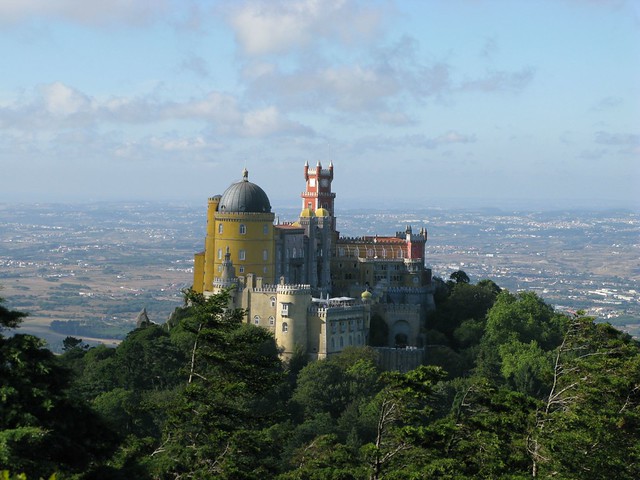
10Pena National Palace

Built in 1842 by King Ferdinand II, the Pena National Palace in Portugal is the oldest European castle in the Romanticism style. The palace was constructed on the ruins of a monastery severely damaged in the Great Lisbon Earthquake of 1755. Today, with it original colors of red and yellow restored, the Pena National Palace is one of Portugal’s most visited monuments.
9Mysore Palace


When Sultan Mehmet the Conqueror took Constantinople in 1453, he first ordered the construction of a new residence. This was to become the palace later known as Topkapi. The palace would remain the imperial enclave of the Ottoman sultans for 4 centuries, from 1465 to 1853. Over the years the palace complex underwent constant modifications. Today the complex is made up of four main courtyards of increasing grandeur and many smaller buildings.
5Chateau de Chambord
 This second most visited château in France (after Versailles), is a masterpiece of the French Renaissance. Chateau de Chambord features 440 rooms, 365 fireplaces, and 84 staircases. Construction of the chateau started in 1519 by King François I so he could hunt in the nearby forests. The cold and massive rooms of the Château made it unpopular as an actual residence and François I himself stayed here for less than 40 days in total.
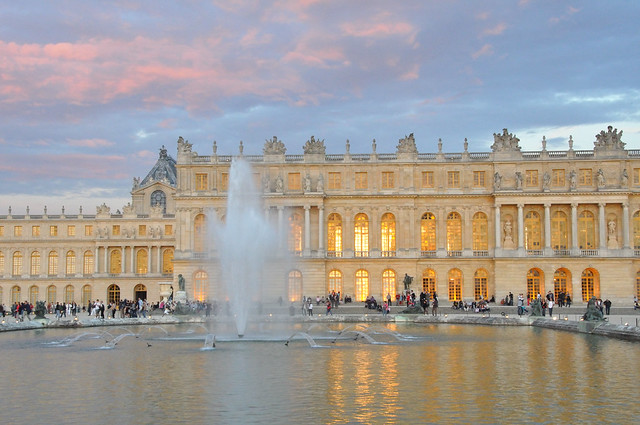
4Palace of Versailles
 Versailles was originally a hunting lodge, built in 1624 by Louis XIII. His successor, Louis XIV, expanded the site into one of the largest palaces in the world, and from 1682, used it to control France by absolute rule. The Palace of Versailles remained the official residence of the Kings of France until October 1789 when the royal family was forced to return to Paris during the French Revolution.
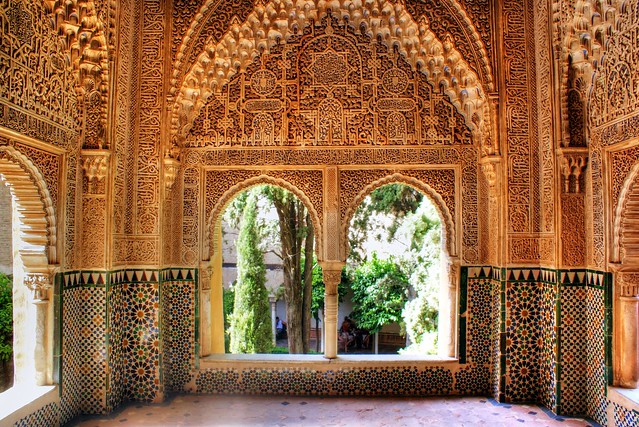
3Alhambra
 Part fortress, part palace and part garden the Alhambra is situated on a plateau overlooking the city of Granada in southern Spain. The palace was constructed during the mid 14th century by the Nasrid sultans and is a testament to the skill of Muslim craftsmen of that time. The Alhambra is now one of Spain’s major tourist attractions and many visitors come to Granada just to see the Alhambra.
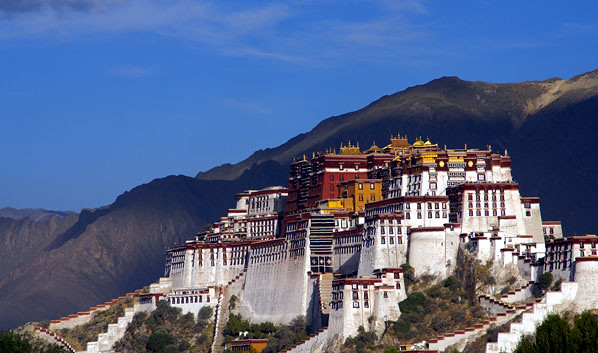
2Potala Palace
 Situated on Marpo Ri hill, 130 meters above the Lhasa valley, the Potala Palace rises a further 170 meters and is the greatest monumental structure in all of Tibet. Although a palace was already built here in the 7th century the construction of the present palace began in 1645 during the reign of the fifth Dalai Lama and by 1648 the Potrang Karpo, or White Palace, was completed. The Potrang Marpo, or Red Palace, was added between 1690 and 1694. The Potala Palace remained the residence of the Dalai Lama until the 14th Dalai Lama fled to India, after the Chinese invasion in 1959.
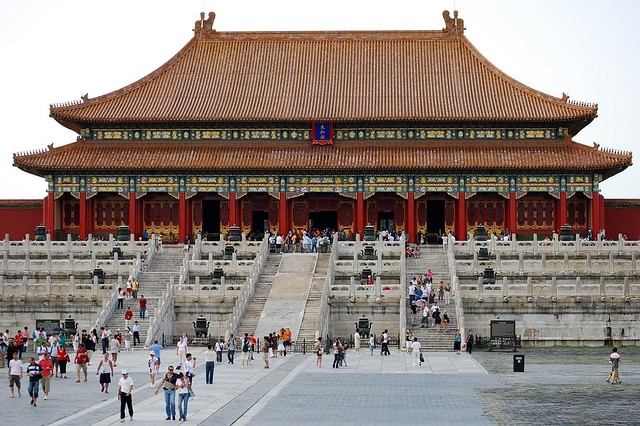
1Forbidden City
 Located in the center of Beijing, the Forbidden City is the world’s largest palace complex covering 72 hectares. Built from 1406 to 1420, the complex consists of 980 surviving buildings with 8,707 rooms surrounded by a six meter deep moat and a ten meter high wall . The distance between the Tiananmen Gate and the Gate of Divine Might is 960 meters. Twenty-four emperors reigned over the country for almost 5 centuries from the Forbidden City until the abdication of Puyi, the last Emperor of China.
source: http://www.touropia.com/beautiful-palaces-in-the-world/
http://www.buzzfeed.com/ariellecalderon/gorgeous-castles-from-around-the-world
http://www.weirdlyodd.com/10-greatest-palaces-around-the-world/
10Pena National Palace
9Mysore Palace
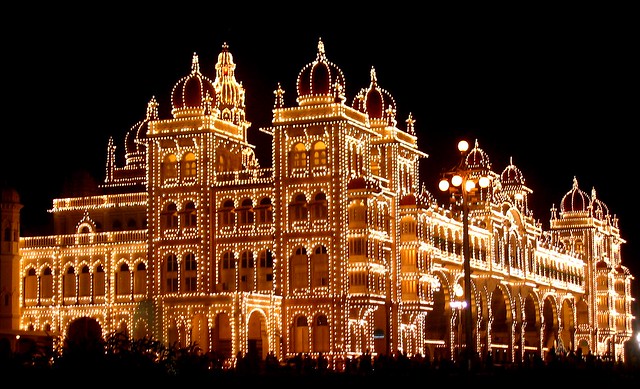
Commonly described as the City of Palaces, Mysore in India has a number of historic palaces of which Mysore Palace is the most famous one. The palace was commissioned in 1897 after the old palace was destroyed in a fire during a wedding, and its construction was completed in 1912. During the Dasara festival in the months of September and October the palace is illuminated with more than 10,000 bulbs, offering a magnificent sight.
8Schönbrunn Palace
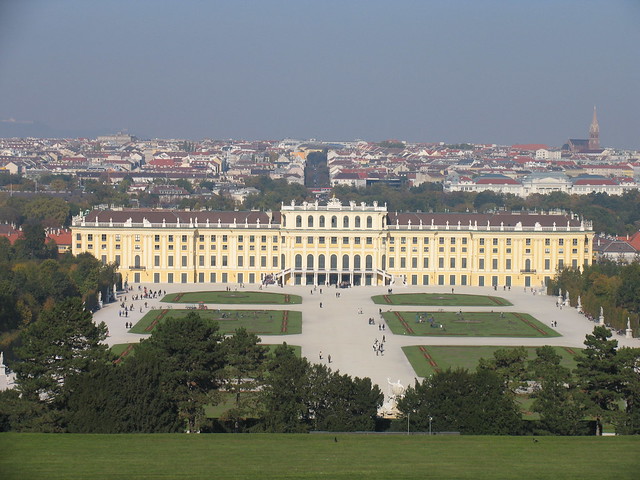
The 1,441 room Schönbrunn Palace, comparable in grandeur to Versailles, is one of the major tourist attractions in Austria and Vienna. The palace was built between 1696 and 1712 at the request of Emperor Leopold I and turned into the imperial summer palace by Maria Theresa. The Palace Park offers a lot of attractions, such as the Privy Garden, the oldest zoo in the world, a maze and labyrinth, and the Gloriette (a marble summerhouse) situated on top of a 60 meter high hill.
7Summer Palace

The Summer Palace is located 15 kilometers (9.3 miles) from central Beijing and is mainly dominated by the Longevity Hill and the Kunming Lake. As its name implies, the Summer Palace was used as a summer residence by China’s imperial rulers – as a retreat from the ‘Forbidden City’. The gardens were substantially extended in 1750, reproducing the styles of various palaces and gardens from around China. Kunming Lake was extended to imitate the West Lake in HangZhou.
6Topkapi Palace

5Chateau de Chambord

4Palace of Versailles
3Alhambra
2Potala Palace
1Forbidden City
source: http://www.touropia.com/beautiful-palaces-in-the-world/
http://www.buzzfeed.com/ariellecalderon/gorgeous-castles-from-around-the-world
http://www.weirdlyodd.com/10-greatest-palaces-around-the-world/
Subscribe to:
Posts (Atom)
Popular Posts
-
 Here Am Going to explain, How to create blog for Google Adsense using Blogger.com and Weebly.com. What is Blogger.com? You need on...
 -
 All bridges serve a purpose, whether utilitarian or inspirational. And some of them add a distinct element of fear. But you don’t have to ...
 -
Shipping Track Aramex http://www.aramex.com/express/track.aspx Blazeflash http://www.blazeflash.net/track.aspx ...
-
.jpg) NELSON MANDELA A towering figure in 20th century history, Nobel Laureate Nelson Mandela showed how wisdom and patience c...
NELSON MANDELA A towering figure in 20th century history, Nobel Laureate Nelson Mandela showed how wisdom and patience c... -
 We tend to hold inventors in high esteem, but often their discoveries were the result of an accident or twist of fate. This is true...
 -
Coca Cola Thums Up ...
-
.jpg) MARTIN LUTHER KING JR Martin Luther King, Jr’s father was a minister. He attended Booker T. Washington High School, an...
MARTIN LUTHER KING JR Martin Luther King, Jr’s father was a minister. He attended Booker T. Washington High School, an... -
1) Norway and Sweden - Snowmobilers line up to ride the pathway of removed trees making up the border between the two Nordic nations. ...
-
1.) A butter stick, for all of your everyday buttering needs! 2.) This motorized ice cream cone. No need to lick around the cone lik...